
| << BACK TO HISTORY & EVENTS | Tweet |
Capelinhos Eruption: The Devastation
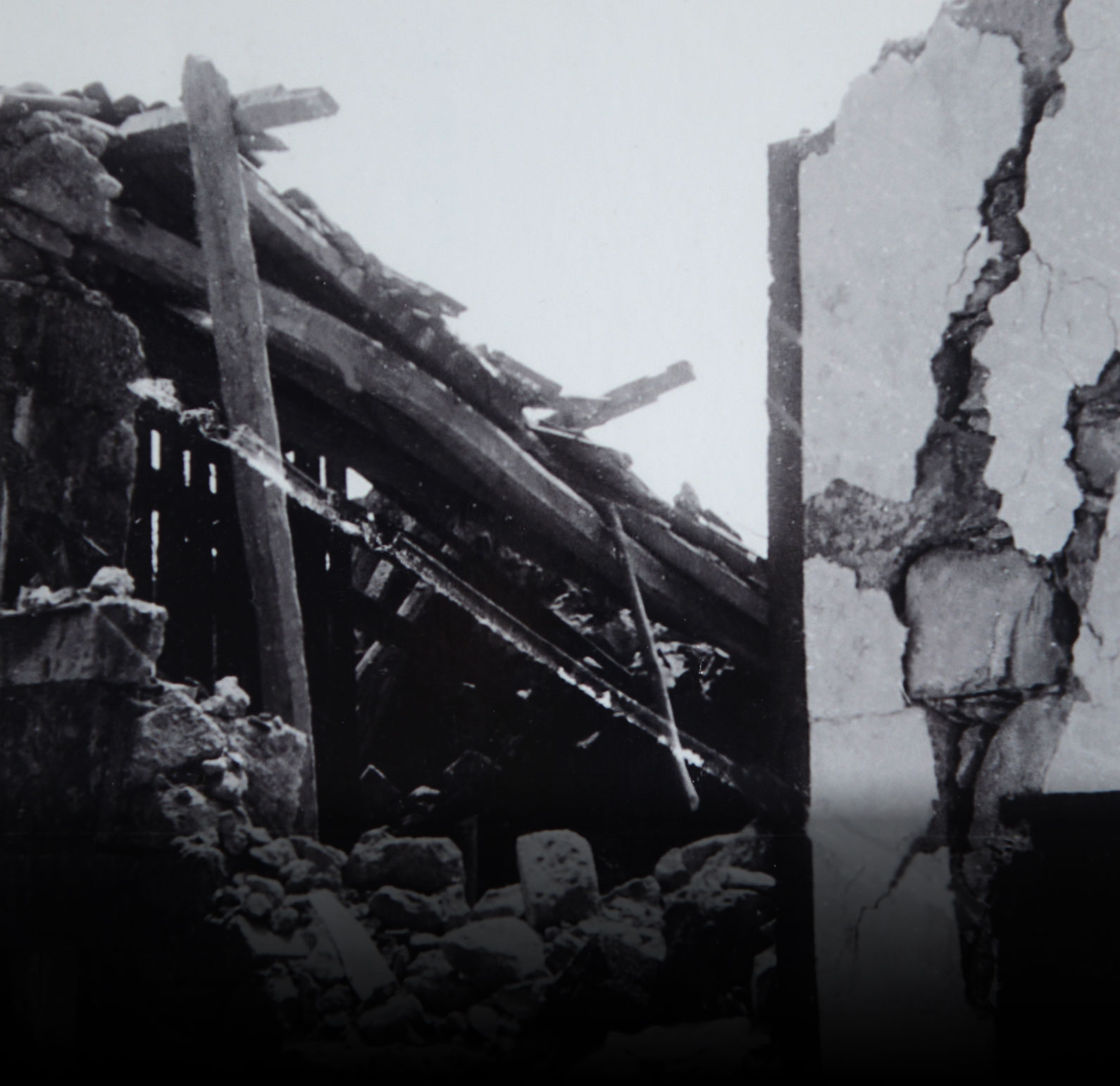
Devastation far and wide
The eruption of the Capelinhos volcano on the Azores island of Faial in 1957 came to be a defining moment in the history of Portuguese immigration. Towns on the northern and western coasts were devastated by the volcano's eruption, which led to the immigration of 4,000 people to the United States.
Years: 1957 — 1958
However, the volcanic activity quickly gained strength and soon the vents were ejecting large amounts of pyroclastic material. The water entering the submarine chimneys contributed the explosive power of the volcano. Violent eruptions continued until October 29. This activity early on created a small island 800 meters (2,400 feet) in diameter and 99 meters (300 feet) high. Some of the ejected material reached 1,400 meters (4,200 feet) into the sky.
The small island submerged during a brief spell of inactivity, but quickly formed again when the eruptions resumed in November. On November 12, the island was attached to Faial when the debris from the eruptions formed an isthmus.
As 1958 began, explosions continued on and off for months, on March 19, 1958, one explosive cloud rose more than 1,800 meters into the sky--more than a mile. Falling ash covered much of the nearby villages of Capelo and Norte Pequeno. Also, the famous lighthouse began to be buried by ash. Between February 9-10, 1.55 meters (5 feet) was deposited. On March 23, 1.9 meters (6 feet) of ash was added to the landscape. At this time, large amounts of lava begin to pour from the volcano, a spectacular and horrifying nighttime sight.
May 12, 1958, became known as the “night the earth shook”. That night, 450 earthquakes spread terror among the people of Faial. The number and intensity of the quakes convinced many that they would not survive the night and indeed that the entire island of Faial was in jeopardy and may suffer the fate of Pelee or Krakatoa--cataclysmic eruptions in the Caribbean and Indonesia that killed thousands.
These tremors also caused vents to open up in the main Caldera of Faial. May 14 saw dramatic flows of lava spewing from the volcanic vents and a lake of molten lava was created. These events were part of the Strombolian phase of the eruptions. Strombolian eruptions are like those of Vesuvius, spectacular displays of lava and ejected material accompanied by tremendous noise. Some sonic booms were heard on Flores Island, 220 kilometers (120 miles) away.
Images (click on image to view full size)
| << BACK TO HISTORY & EVENTS | Tweet |